
สรุปสำหรับบล็อกภาษาไทย (Thailand Moves to Monitor E-Commerce Marketplace Fees)


Thailand is increasing scrutiny of e-commerce marketplace charges after growing concern that platform fees are putting pressure on online sellers. According to the Bangkok Post, a new panel is being formed to oversee e-commerce charges and monitor platform business practices, with the Trade Competition Commission of Thailand, TCCT, scheduled to discuss the issue on July 6.
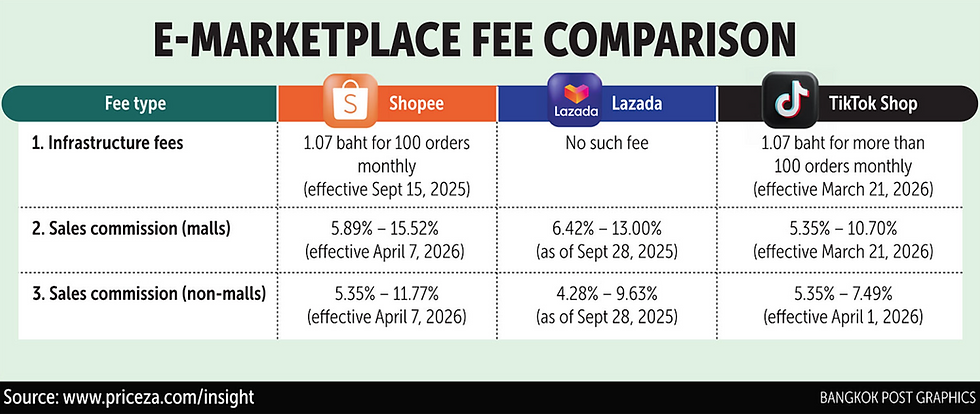
The issue centers on marketplace “GP” charges, which can include commission, payment fees, platform fees, and newer infrastructure-related fees. Earlier reporting cited government concern that total platform charges of around 30% are too high for many sellers. The Commerce Ministry and Digital Economy and Society Ministry have also been looking at ways to engage major platform operators and seek a more balanced structure for platforms, sellers, and consumers.
This follows Thailand’s broader move to regulate digital platforms more closely. TCCT’s e-commerce platform guidelines took effect on March 25, 2026, and cover both pricing and non-pricing conduct by platforms. The rules look at practices such as excessive fees, price discrimination, sudden fee changes, forced use of platform logistics or payment channels, reduced seller visibility, self-preferencing, and misuse of seller data.
Why this matters for Thai sellers
For Thai sellers, this could become an important turning point. Marketplace growth has created sales opportunities, but seller margins are increasingly squeezed by commissions, ads, logistics requirements, campaign participation, and platform-controlled visibility. If regulators become more active, sellers may gain more leverage around fee transparency, logistics choice, payment options, campaign participation, and dispute handling.
What sellers should do now
Thai sellers should start documenting all platform fees, campaign charges, logistics restrictions, payment requirements, sudden fee changes, and visibility drops. Sellers should also compare net margin by platform, not just GMV. The key KPI is not sales volume. It is contribution profit after platform fees, ads, logistics, discounts, and returns.
Bottom line
Thailand is moving from light-touch platform growth toward more active marketplace regulation. Sellers should not expect fees to disappear, but they should expect more debate around fairness, transparency, and whether platforms are using their market power responsibly.
ไทยเริ่มจับตาค่าธรรมเนียมแพลตฟอร์มอีคอมเมิร์ซ
ประเทศไทยกำลังเพิ่มการตรวจสอบค่าธรรมเนียมของแพลตฟอร์มอีคอมเมิร์ซ หลังจากมีความกังวลว่าค่าใช้จ่ายต่าง ๆ ของมาร์เก็ตเพลสกำลังกดดันผู้ขายออนไลน์มากขึ้น รายงานของ Bangkok Post ระบุว่าจะมีการตั้งคณะทำงานใหม่เพื่อดูแลค่าธรรมเนียมอีคอมเมิร์ซและติดตามพฤติกรรมทางธุรกิจของแพลตฟอร์ม โดยคณะกรรมการแข่งขันทางการค้า, TCCT, มีกำหนดหารือเรื่องนี้ในวันที่ 6 กรกฎาคม
ประเด็นหลักคือค่า “GP” หรือค่าธรรมเนียมรวมที่ผู้ขายต้องจ่ายให้แพลตฟอร์ม ซึ่งอาจรวมถึงค่าคอมมิชชัน ค่าระบบชำระเงิน ค่าแพลตฟอร์ม และค่าบริการโครงสร้างพื้นฐานรูปแบบใหม่ ก่อนหน้านี้มีรายงานว่าภาครัฐมองว่าค่าธรรมเนียมรวมที่อยู่ประมาณ 30% ถือว่าสูงเกินไปสำหรับผู้ขายจำนวนมาก กระทรวงพาณิชย์และกระทรวงดิจิทัลเพื่อเศรษฐกิจและสังคมจึงเตรียมหารือกับผู้ให้บริการแพลตฟอร์มรายใหญ่เพื่อหาทางออกที่สมดุลระหว่างแพลตฟอร์ม ผู้ขาย และผู้บริโภค
ความเคลื่อนไหวนี้เกิดขึ้นต่อเนื่องจากแนวทางใหม่ของ TCCT ที่เริ่มมีผลตั้งแต่วันที่ 25 มีนาคม 2569 โดยครอบคลุมทั้งพฤติกรรมด้านราคาและไม่ใช่ด้านราคา เช่น การเก็บค่าธรรมเนียมสูงเกินสมควร การเลือกปฏิบัติด้านราคา การเปลี่ยนค่าธรรมเนียมแบบกะทันหัน การบังคับใช้ขนส่งหรือระบบชำระเงินของแพลตฟอร์ม การลดการมองเห็นของร้านค้า การให้สิทธิพิเศษกับสินค้าของแพลตฟอร์มเอง และการนำข้อมูลของผู้ขายไปใช้แข่งขันกับผู้ขาย
ทำไมเรื่องนี้สำคัญกับผู้ขายไทย
สำหรับผู้ขายไทย นี่อาจเป็นจุดเปลี่ยนสำคัญ มาร์เก็ตเพลสช่วยเพิ่มยอดขายและการเข้าถึงลูกค้า แต่ในขณะเดียวกันกำไรของผู้ขายถูกกดดันจากค่าคอมมิชชัน ค่าโฆษณา ค่าขนส่ง ส่วนลด แคมเปญบังคับ และการมองเห็นที่ถูกควบคุมโดยอัลกอริทึมของแพลตฟอร์ม
หากภาครัฐจริงจังมากขึ้น ผู้ขายอาจมีอำนาจต่อรองมากขึ้นในเรื่องความโปร่งใสของค่าธรรมเนียม การเลือกผู้ให้บริการขนส่ง การเลือกช่องทางชำระเงิน การเข้าร่วมแคมเปญ และการร้องเรียนเมื่อถูกปฏิบัติอย่างไม่เป็นธรรม
สิ่งที่ผู้ขายควรทำตอนนี้
ผู้ขายควรเริ่มเก็บหลักฐานและข้อมูลต้นทุนทั้งหมด เช่น ค่าธรรมเนียมแพลตฟอร์ม ค่าแคมเปญ ค่าโฆษณา ข้อจำกัดด้านขนส่ง เงื่อนไขการชำระเงิน การเปลี่ยนค่าธรรมเนียมแบบกะทันหัน และยอดการมองเห็นที่ลดลงโดยไม่มีเหตุผลชัดเจน
อย่าดูแค่ GMV หรือยอดขายรวม ให้ดู “กำไรจริงหลังหักต้นทุนแพลตฟอร์ม” เพราะ KPI ที่สำคัญที่สุดไม่ใช่ยอดขาย แต่คือกำไรหลังหักค่าธรรมเนียม ค่าโฆษณา ค่าขนส่ง ส่วนลด และสินค้าคืน
ประเทศไทยกำลังเปลี่ยนจากยุคปล่อยให้แพลตฟอร์มเติบโตอย่างอิสระ ไปสู่ยุคที่รัฐเริ่มกำกับดูแลมาร์เก็ตเพลสมากขึ้น ผู้ขายไม่ควรคาดหวังว่าค่าธรรมเนียมจะหายไป แต่ควรคาดหวังว่าจะมีการถกเถียงมากขึ้นเรื่องความเป็นธรรม ความโปร่งใส และการใช้อำนาจตลาดของแพลตฟอร์มอย่างรับผิดชอบ.


Comments